
KneeReviver©: Joint-preserving therapy for knee osteoarthritis
Mechanical distraction – in our practice with biological support
Osteoarthritis of the knee can significantly impair everyday life and mobility. Many sufferers want a way to preserve their knee for as long as possible and regain more stability and comfort in everyday life.
A six-week treatment with the KneeReviver© is a modern, joint-preserving procedure based on mechanical relief of the knee joint. The so-called joint distraction temporarily creates space in the joint and initiates targeted biological repair processes, which can lead to cartilage regeneration even in cases of advanced osteoarthritis.
In our practice, this procedure is combined with regenerative cell therapy (stem cells).
This treatment is suitable for patients under the age of 65 who do not have a severe bowleg or knock-knee deformity.





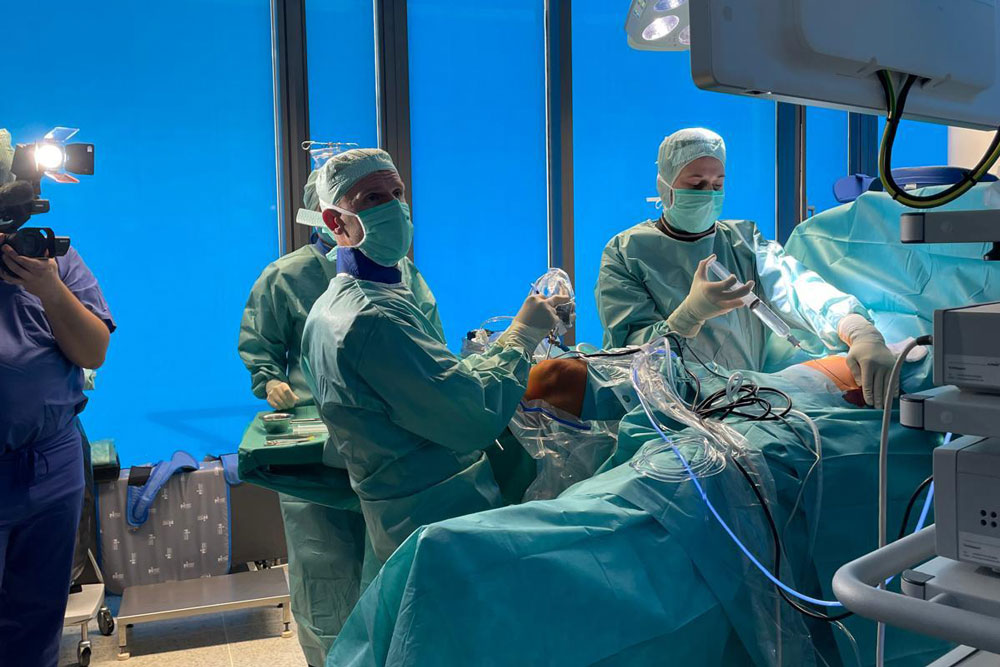
Modern joint-preserving therapy approaches for the knee
How KneeReviver© works – and when regenerative cells can supplement it
KneeReviver© is a joint-preserving procedure that has been established for over ten years and works exclusively with a mechanical principle: the temporary pulling apart of the knee joint, known as joint distraction.
The knee is stabilized by an external system for six weeks and pulled apart slightly, which relieves the joint structures. This process, together with the biological stimulation, can contribute to the joint being able to bear more weight again.
In addition, our practice also offers the option of combining regenerative stem cell therapy. This form of therapy is considered independently of the KneeReviver© and is used when it seems appropriate in the individual case. The cells come from the patient’s own body and can promote the regeneration of cartilage tissue.
KneeReviver© thus offers a structured, joint-preserving approach that can be an interesting alternative to classic joint replacement in suitable indications.
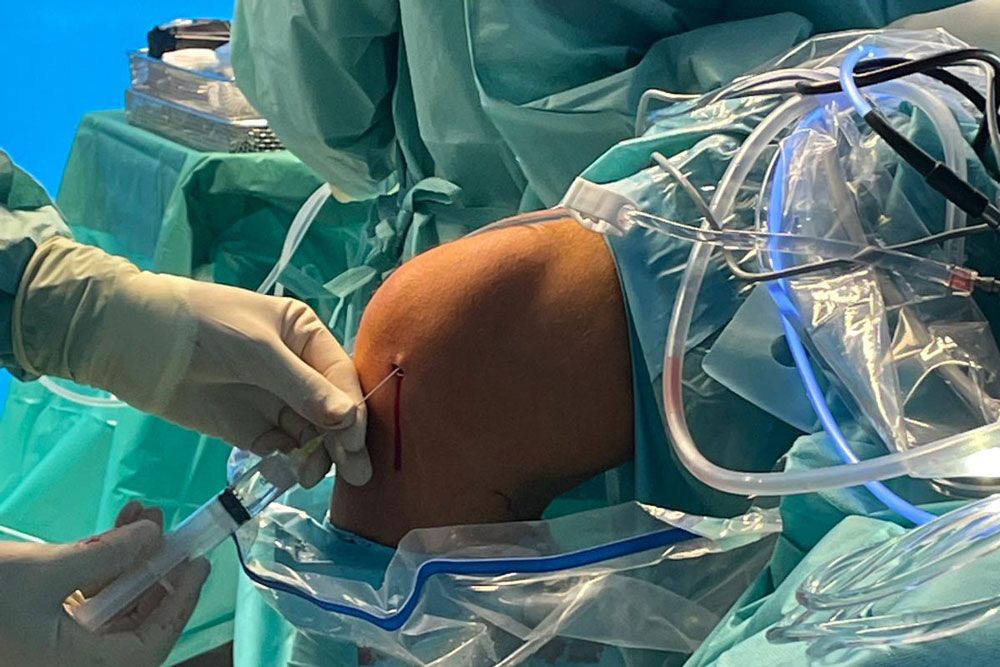
The procedure – KneeReviver© in 5 steps
Clearly explained from the first consultation to rehabilitation
1. personal consultation & diagnostics
The first step is a detailed consultation in which your complaints and previous findings are discussed. This is supplemented by a diagnostic examination to check whether the procedure is suitable for your individual situation. The diagnostics include a loaded X-ray/DVT image and a current MRI with cartilage mapping. These examinations can be carried out on our premises.
2. preparation & surgical application of the KneeReviver©
If the requirements are met, the KneeReviver© is fixed to the femur and tibia in a surgical procedure. The two-day inpatient procedure is planned and performed under safe medical conditions.
3rd phase of joint distraction
The six-week distraction phase begins after the implantation. The knee joint is pulled apart by at least 5 mm, which relieves the joint surfaces. The patient can put full weight on the operated leg in extension. Thrombosis prophylaxis is carried out due to the extended position. Regular medical check-ups are carried out after at least one and three weeks. Patients who have to travel a long way can also be checked by a doctor on site.
4. removal of the system & resumption of mobility
Once the distraction is complete, the device is completely removed during a one-day inpatient stay. An imaging check (X-ray / DVT) is carried out on site to assess the condition of the knee joint. This is followed by the phase of gradually regaining mobility through independent exercises and accompanying physiotherapy measures. The time required varies from person to person and is usually around six to twelve weeks.
5. rehabilitation & long-term stabilization
Individually tailored follow-up treatment supports the further development of the knee joint. In addition to personal contact, patients are also accompanied by an app that supports the rehabilitation process.
A follow-up check in our practice takes place after one year at the latest. This involves new imaging examinations (X-ray / DVT) and an MRI examination with cartilage mapping to assess the condition of the knee joint in detail.
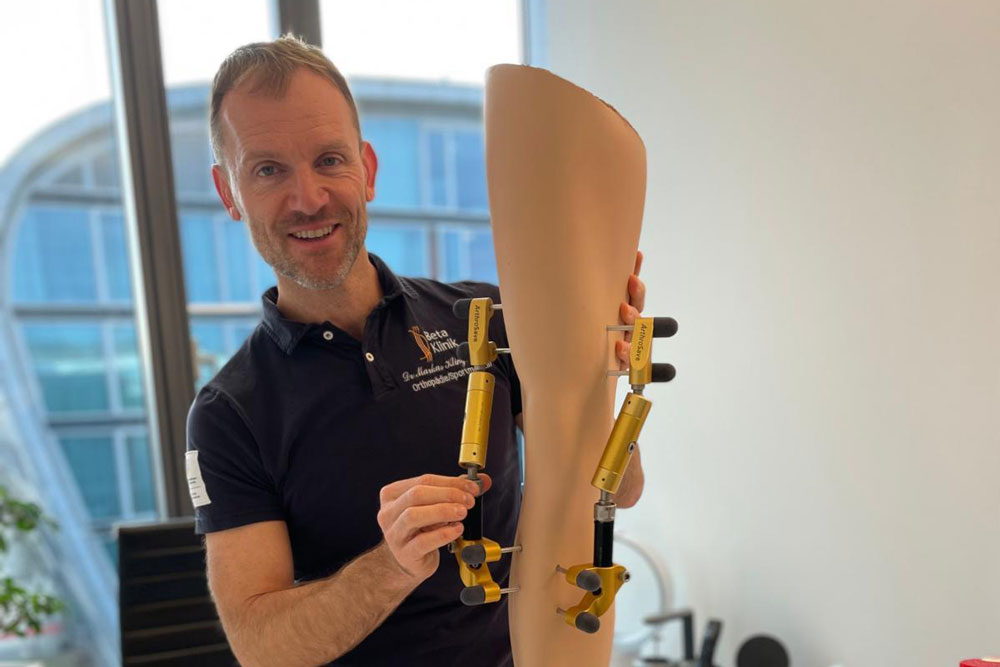
Why KneeReviver© in our practice
Experience and specialization in joint-preserving therapy
The treatment of knee osteoarthritis requires experience, precision and a sound individual assessment. In our practice, we combine mechanical and biological approaches with specialist expertise.
We are one of the first practices to combine the KneeReviver© procedure with regenerative stem cell therapy. This combination is not standard, but is used deliberately and individually. Stem cell therapy is assessed independently of the KneeReviver© and then supplemented if it appears to make medical sense in the respective case. The cells used come from the patient’s own body and can support regenerative processes in the joint.
Dr. Klingenberg has many years of experience in regenerative medicine and has performed over 1,700 stem cell treatments as of January 2026 – making him one of the most experienced practitioners in Germany.
Another special feature of our practice is cartilage mapping, which enables a differentiated assessment of the condition of the cartilage and makes treatment planning much more precise. This diagnostic depth is only offered by a few facilities.
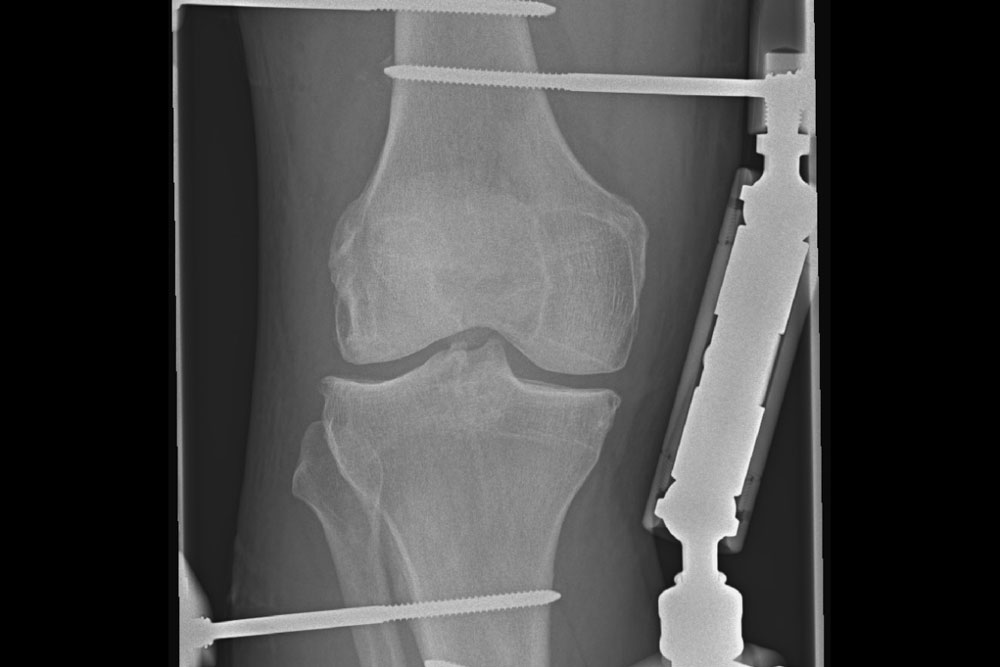
FAQ about KneeReviver©
Frequently asked questions and answers
Your next step – personal consultation on KneeReviver©
Knee joint distraction is considered a modern, joint-preserving approach for advanced knee osteoarthritis. For younger patients, it can be a scientifically proven alternative to early knee replacement and can delay joint replacement for years.
Long-term data with follow-up observations of up to ten years show that the observed regenerative effects may be more permanent than previously assumed. If you would like to find out more about KneeReviver© in relation to your individual situation, we would be happy to advise you in a personal consultation.
Make an appointment and receive individual support – transparent, understandable and tailored to your needs.






Back to all services
Make an appointment now